Websites for physiotherapists and allied health clinics
A physio's site is read by someone in pain, about to trust a clinician they have never met. It has to prove registration and make the next step obvious.
What your customers are actually doing
- They are in pain, often worried, and about to let a stranger work on their back
- They search the situation, not the technique, so it is “physio after knee surgery”, never “post-operative rehabilitation protocols”
- Many of them saw your Google listing first and are on the site to check you are real
- They want the address, the hours and a phone number, and they will not go hunting for any of them
So the site has to
- Registration and years of experience above the fold
- A named clinician with a photograph and a stated reason for opening the doors
- Services grouped by the patient's situation, not by treatment modality
- Address, phone and opening hours on the page, repeated at the bottom
- Agreement between the site and the Google Business Profile on every detail
Why a physio’s website is different
A tradie’s customer is standing in front of a broken thing. A physio’s patient is the broken thing. They are in pain, they are often anxious, and they are about to let a stranger work on their spine or a joint that was operated on six weeks ago. That decision gets made under stress, and clever design does nothing for someone in that state. Visible qualifications and an obvious way to make contact do.
So the site’s job is to prove the clinic is registered and experienced, to describe the patient’s own situation in words they would use, and to make ringing or turning up the easiest thing on the page.
Qualifications go first, not on the About page
Anyone can call themselves a therapist. Registration is what separates a clinic from that, so it sits directly under the hero. On the Spine & Stability site the licensed practitioners, the years of experience and the patient rating are the first thing a visitor reads after the headline. The About page repeats it, but nobody in pain is reading the About page.
A named clinician does the rest. Kyla founded the clinic, and her statement about why carries the positioning. A photograph, a name and a reason for opening the doors reads completely differently from anonymous “our team of professionals” copy, and for a health business it is the single cheapest trust signal there is.
Group the services by what the patient is going through
Patients rarely arrive knowing which technique they need. They arrive knowing they had surgery, or that their back has hurt for a year, or that they rolled an ankle on Saturday. So the services on the site are sports injury rehabilitation, chronic pain management and post-operative care, in that language, rather than a list of modalities that only another physio could sort through.
Evidence-based, and said plainly. The site talks about internationally recognised protocols, current research and personalised care plans. That puts clear water between the clinic and the wellness end of the market, and it reassures anyone who arrived holding a doctor’s referral that this is the right kind of place.
The site and the Google listing have to agree
For a clinic, the map listing is often where a patient lands before they ever reach the site: address, hours, phone number, reviews. If the site says one set of hours and the listing says another, the patient does not know which to believe, and the clinic finds out when someone turns up to a locked door.
So I helped get the Google Business Profile up and the review links working alongside the site, and the two carry the same details. The street address, the phone number and the weekday hours are stated plainly on the page, and the same contact prompt repeats down the page and closes it. Someone in pain will give up long before they go hunting for a phone number.
The bits nobody quotes for
Kyla had no online presence at all when she came to me, and understood that fixing that was the first job rather than a nice-to-have. So this was the whole setup: the domain, bought and maintained in the clinic’s name; Microsoft 365, set up at the start and still administered, now across nine users; the Google Business Profile; and then the site. The first three are the least glamorous part of the engagement, and left alone they would have become the receptionist’s second job.
They came back for a second site
The strongest thing I can say about the Spine & Stability build is what happened next. The clinic runs physiotherapist-led Pilates classes, and the owner wanted those advertised separately from the clinic. That became Pilates in Harare, its own brand in the clinic’s family, built in about a week. The write-up on websites for Pilates studios covers the thinking behind splitting it out.
The jobs behind this page
Every claim above comes from a site that is live right now. Here is the write-up, including the parts that are still on the to-do list.
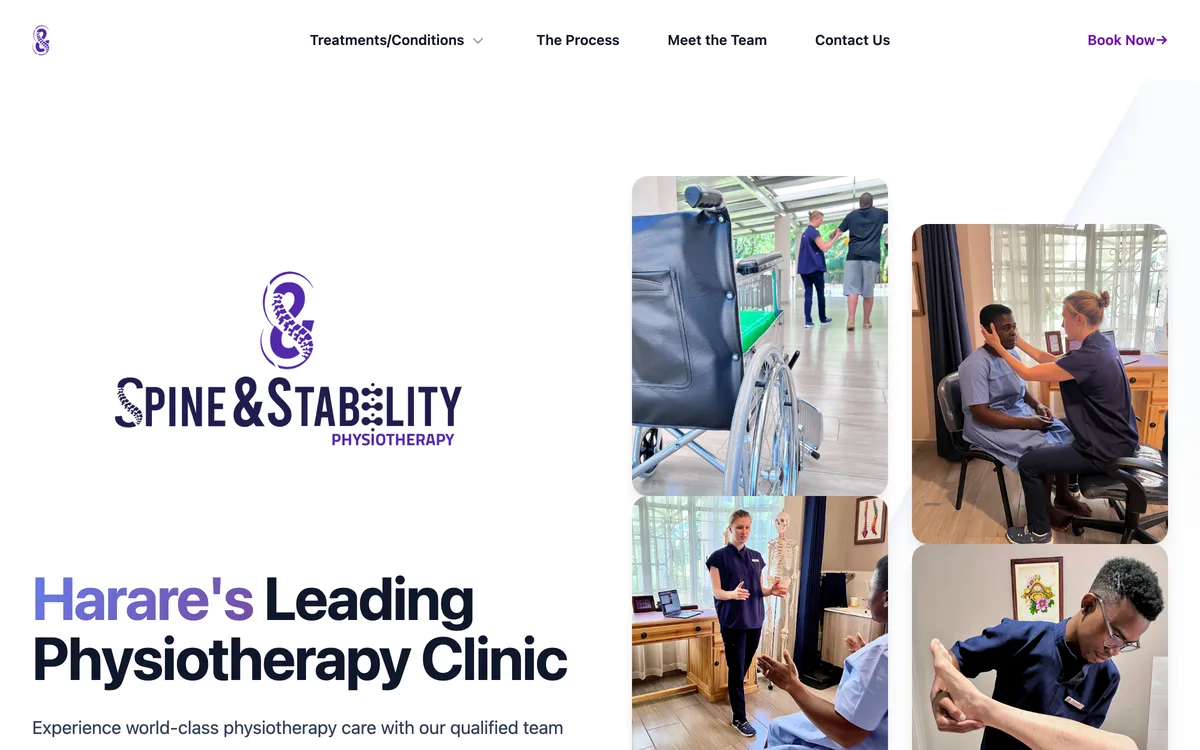
Spine & Stability Physiotherapy
A site for a physiotherapy clinic in Harare, written for someone in pain deciding whether to trust a clinician they've never met.

Pilates in Harare
A second site for an existing client: the clinic's physiotherapy-led Pilates classes, given their own brand, pricing and search presence.
What does it cost?
The prices are on the site, which is more than most will tell you before a sales call. One-page sites start at $990 and a full multi-page site at $2,490, with a single fixed quote agreed before any work starts.
See the pricingTell me about the job
What you do, where you work, and what you need the site to bring in. Free quote, honest advice about whether physiotherapists is a good fit for me, and a reply within one business day.
Get a free quote